Belfast's historic waterfront buildings form an architectural testament to the city's rich 19th-century maritime heritage and the seafaring traditions that shaped generations of dock workers, sailors, and merchants.
Belfast Harbour Commissioners
The Belfast Harbour Office has been the headquarters for the Harbour Commissioners for more than 150 years. Built in sections, the first section was designed by the Harbour’s engineer George Smith and opened in 1854. An additional section was designed by celebrated Belfast architect William Lynn, reflecting an Italian palazzo and completed in 1895. The flax flower is seen throughout the building, emphasising the importance of the linen industry to Belfast and Belfast Port. The Harbour Offices has some beautifully ornate rooms, such as the Barnett Room, with its curved ceilings and stained-glass windows, and artwork reflecting the maritime history of the Harbour.
St Joseph’s Church
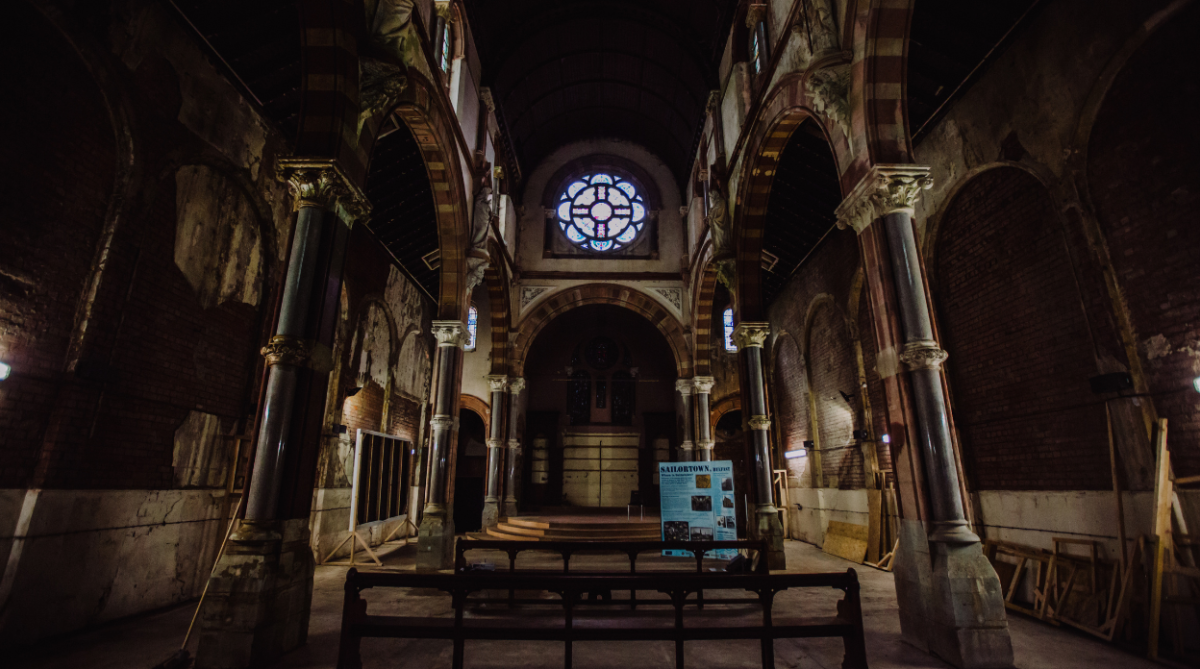
St Joseph’s Church, a Grade 2 listed building built in the 1870s, was known as the Chapel on the Quay, with its spire often the first and last sight of home for generations of seamen. Located on Princes Dock Street, the chapel was closed in 2001 and has recently been awarded funding to allow it to showcase its rich Maritime Heritage through photographs, stories, film and exhibitions. The surrounding residential area of Sailortown was once home to thousands of dock workers and their families, and following redevelopment work, St Joseph’s is one of the few remaining heritage sites.
Sinclair Seamans
Dating from 1857, the interior of this Venetian style harbourside church was refurbished on a maritime theme and is continued as a gleaming tribute to the city's seafaring traditions by a friendly congregation. Don't miss the stained glass, the bell from HMS Hood (the First World War ship) and the lifeboat shape collection boxes. Next door is the Belfast Harbour Commissioners Office, an imposing Victorian block.
Shipyard workers, dockers and sailors at the time of Titanic would have felt at home in its ship-like interior, with its pulpit shaped as a ship’s prow flanked by navigation lights, ship’s binnacle font and the bell of HMS Hood calling worshippers to service.
The church is open for visitation on Wednesdays afternoon 2-4.30pm except January and February.
Custom House Belfast
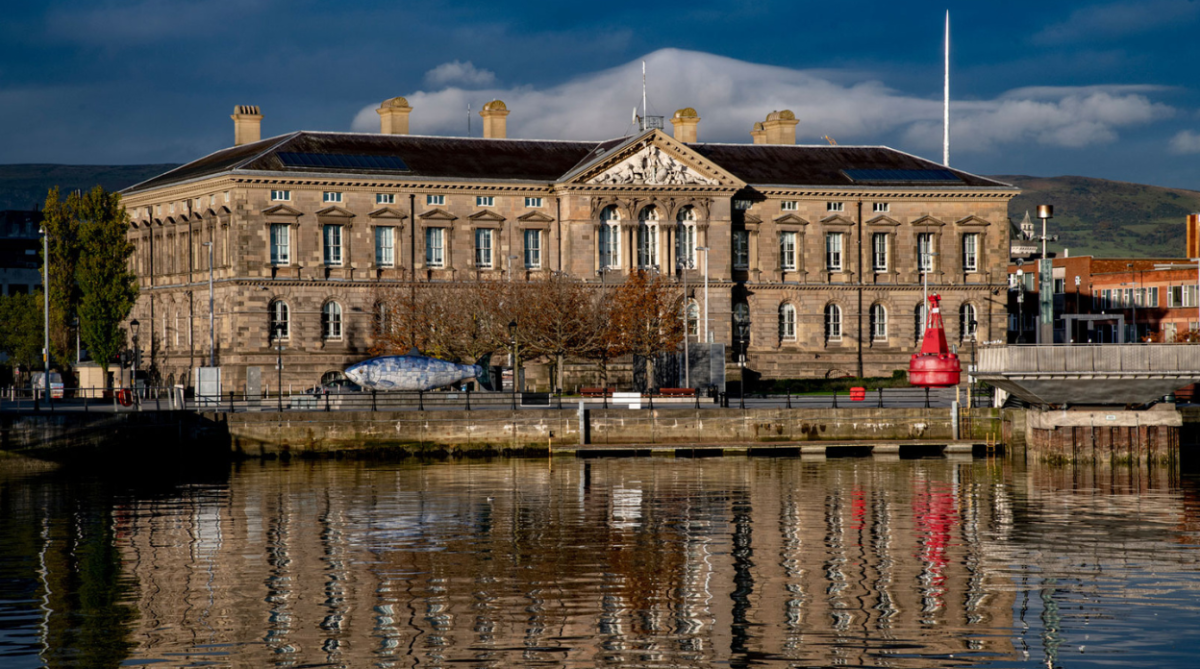
The Custom House was built in 1856-7 and designed by Belfast architect Charles Lanyon. For hundreds of years, merchants would have arrived in Belfast with goods to trade and had to register at the Custom House. The building has statues of Neptune, Mercury and Britannia, and winged figures representing Manufacture, Peace, Commerce and Industry.
Harland & Wolff Drawing Offices
The former Harland & Wolff Headquarter Building and Drawing Offices dates from 1886 and was the centre of H&W activities for more than a century. It was in this building where men created, and designed thousands of ships including the White Star Olympic Class Liners – Olympic, Titanic and Britannic and naval warships such as HMS Belfast. The building was vacated by H&W in 1989, and restoration work began in 2016 to turn the derelict building into Titanic Hotel Belfast, which opened in September 2017. Many of the heritage features have been retained and restored, and the two Drawing Offices are stunning reminders of the grandeur of Harland & Wolff’s passenger liners.